The increase of mundial waste and the ocean: the largest plastic dumping site
Authors: Jon and Yitong
The first thing we have to remember is that the major part of the volume of waste generated is composed of plastics. The plastic has been a prodigious product which has revolutionized our world since it’s creation, but with this miracle comes the negative part which is the tremendous negative impact that those little items could do if they aren’t treated correctly. Nowadays, for the first time since 1860 when it was invented, we are seeing the consequences of the terrible management of our waste. But there are countries that even with all the expert’s opinion about these effects they still negate what’s in front of their coast.
The first thing we have to remember is that the major part of the volume of waste generated is composed of plastics. The plastic has been a prodigious product which has revolutionized our world since it’s creation, but with this miracle comes the negative part which is the tremendous negative impact that those little items could do if they aren’t treated correctly. Nowadays, for the first time since 1860 when it was invented, we are seeing the consequences of the terrible management of our waste. But there are countries that even with all the expert’s opinion about these effects they still negate what’s in front of their coast.

Whole countries have made their form of living about making these materials without repairing on the planet, for example, the Pacific and the East Asia region are responsible for generating the 24 per cent of all mundial waste. It’s obvious that the creation of new items made of plastic will increase in the next decades, the mundial population is increasing and the waste generated will increase with them.



All of us live in a common world, but yesterday, today, and tomorrow there will exist differences between
different parts of the world, so to attack this problem we have to see the problem from two views.
different parts of the world, so to attack this problem we have to see the problem from two views.
On one hand the least developed countries, which are often the ones where are installed all the
plastics industries for the cheaper prices and low restrictions about the waste generated, it’s been
proved that most of this waste isn’t treated correctly so basically they throw it where it doesn’t disturb,
not in a landfill, not in a recycle plant, they throw it directly into the ocean.
plastics industries for the cheaper prices and low restrictions about the waste generated, it’s been
proved that most of this waste isn’t treated correctly so basically they throw it where it doesn’t disturb,
not in a landfill, not in a recycle plant, they throw it directly into the ocean.
On the other hand, the most developed countries who often show their pride for being effective
at the recycling problem, but many people don’t know that at least countries like Spain exports
nearly 60% of their waste.
at the recycling problem, but many people don’t know that at least countries like Spain exports
nearly 60% of their waste.
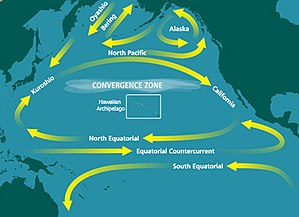
Apparently, there is no problem throwing waste directly to the sea because it’s so large that waste
goes away, but it has been proved that for the ocean currents the major part of the waste dropped
to the sea ends in a concrete place, whose name is the garbage patch or pacific trash vortex.
goes away, but it has been proved that for the ocean currents the major part of the waste dropped
to the sea ends in a concrete place, whose name is the garbage patch or pacific trash vortex.
This patch on the ocean is estimated to have an area of 700.000 square kilometres.
Did you know that the major part of the plastics that end in the ocean doesn’t come from throwing it
directly into the sea? The major part of those plastics come from 2 different ways:
directly into the sea? The major part of those plastics come from 2 different ways:
The plastics we throw to the regular bin that will end into a landfill, this plastic will be treated as
normal waste, but most of those products are so light that from wind and rain they will go to the near
rivers, drills and end up in the ocean.
normal waste, but most of those products are so light that from wind and rain they will go to the near
rivers, drills and end up in the ocean.
The other way, and it’s one of the most difficult to close, is made by the microplastics. Those microplastics
are introduced on our common hygienic products just like toothpaste, detergents, shampoos.
And those microfibers are so difficult to remove that the water depuration plants can do nothing so at
the end all of them are thrown to the rivers and sea where it will be consumed by aquatic life confusing
it for plankton.
To solve this problem there are wastewater treatment plants which serve specifically to
collect and treat wastes that are known to include great amounts of microplastic sources.
They are known to remove from 75-99% of microplastics, even with this great data , the remnant
percentage combine with the great amount of water treated ends with a great number of microplastics
dropped into the sea.


Comentarios
Publicar un comentario